If you love homes with character, Minneapolis gives you a lot to notice. From porch-centered bungalows to horizontal Prairie School designs and storybook Tudor Revival houses, the city’s neighborhoods often reflect the era in which they grew. When you understand that connection, it becomes much easier to narrow your search and spot the details that matter most to you. Let’s dive in.
Why Minneapolis Is So Rewarding
Minneapolis is especially appealing for architecture lovers because its housing stock closely follows the city’s growth patterns. In many parts of the city, the style of the homes, the layout of the blocks, and the setting all tell the same story.
That means your home search can become more focused and more enjoyable. Instead of looking at every neighborhood the same way, you can match your style preferences to places shaped by streetcar expansion, lakefront parkways, or postwar development.
Craftsman And Bungalow Homes
If you are drawn to homes that feel warm, practical, and handmade, Craftsman and bungalow styles are a great place to start. These homes often look low to the ground, feature strong wood details, and put the front porch at the center of daily life.
In Minneapolis, the Craftsman style was popular in the early 1900s, and bungalows were one of the most common house types built in Minnesota from about 1910 into the early 1920s. Local landmark examples include the Olson House and Wakefield House in Lynnhurst, the Backus House in Lyndale, and the Fournier House in Cleveland.
One helpful thing to know is that Minneapolis homes do not always fit into one neat category. In some cases, Craftsman and Prairie details overlap, which gives many houses a layered look instead of a textbook one.
Tudor Revival Homes
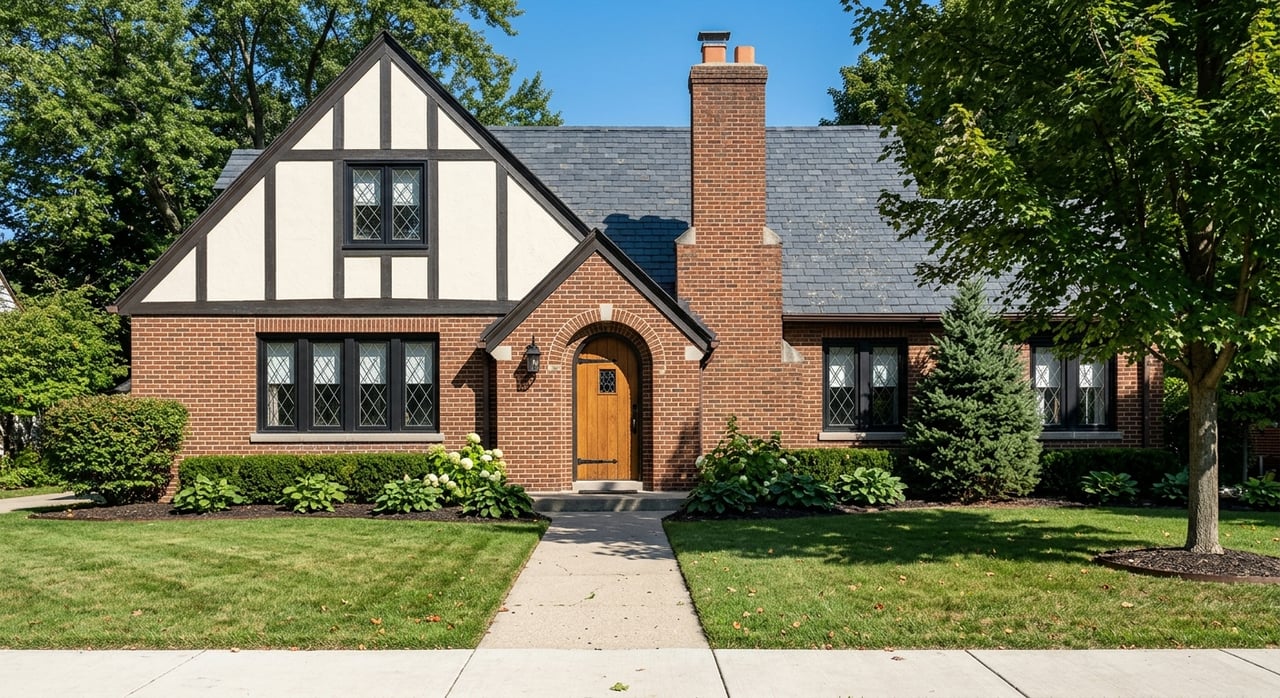
Tudor Revival homes are easy to recognize once you know the main features. You will often see steep roofs, brick or stucco exteriors, and half-timbering, along with English Cottage-inspired details.
In Minneapolis, this style was especially popular in the 1920s and 1930s. Notable local examples include the Webster-Deinard House in Lowry Hill, the Walling House in Fulton, and the Alfred Pillsbury House in Whittier.
The city also notes that many Tudor houses by Liebenberg & Kaplan from the 1920s and 1930s were built in Lowry Hill and Kenwood. If you are searching for a home with a more romantic, historic feel, those areas can be especially interesting to explore.
Prairie School Homes
Prairie School homes tend to appeal to buyers who want architecture that feels grounded in the landscape. This style is known for strong horizontal lines and a close relationship between the house and its setting.
In Minneapolis, standout examples include the Purcell-Cutts House in East Isles, the Willey House in Prospect Park, the Wakefield House in Lynnhurst, and the Backus House in Lyndale. These homes often feel like they belong to the lot rather than simply sitting on top of it.
For architecture-focused buyers, Prairie School homes can be especially rewarding because the design is often about proportion, rhythm, and setting rather than ornament alone. The effect can feel calm, intentional, and distinctly regional.
Mid-Century And Postwar Homes
Not every architecture search in Minneapolis has to focus on early 20th-century styles. If you prefer cleaner lines and simpler forms, the city’s postwar neighborhoods offer a different kind of appeal.
The city’s modern-era context study points to Kenny as a postwar subdivision built in the early 1950s. Armatage, Diamond Lake, and Wenonah also saw postwar single-family development.
In these neighborhoods, you are more likely to find ranches, split-levels, and other straightforward mid-century forms than ornament-heavy revival styles. The street rhythm can feel more open, which creates a noticeably different experience from older lake or streetcar-era neighborhoods.
Best Minneapolis Neighborhoods For Style-First Browsing
Lynnhurst For Lake And Park Setting
Lynnhurst is a strong choice if you care about both architecture and setting. The neighborhood developed east of Lake Harriet and is described by the city as large-lot, tree-filled, and park-like.
That backdrop pairs naturally with older homes and landscape-conscious design. It is a smart place to look if you want architecture that feels connected to mature trees, open green space, and the parkway environment.
East Isles For Older Homes And Variety
East Isles offers a mix of older housing along with later apartments and condos, all tied closely to the Chain of Lakes setting. The city notes that 63 percent of residential structures there were built before 1920.
For you as a buyer, that means East Isles can offer variety without losing its historic character. It is a good neighborhood to explore if you enjoy older homes but do not expect every block to look the same.
Fulton For Landmark Tudor Appeal
Fulton is worth attention if Tudor Revival homes are high on your list. The Walling House, one of the city’s noted Tudor examples, sits on a large double lot facing Lake Harriet.
That does not mean every home in Fulton is Tudor Revival, but it does show how architecture and setting can come together in a memorable way. If you appreciate classic forms near the lakes area, Fulton may be a compelling stop on your search.
Lowry Hill East For Streetcar-Era Character
Lowry Hill East is one of the clearest examples of a Minneapolis neighborhood shaped by streetcar expansion. The city describes it as a streetcar-suburb area with tree-lined streets and a mix of Colonial Revival, Queen Anne, Prairie School, and Craftsman homes.
This is a great area to visit if you enjoy seeing several style families in one broader neighborhood setting. It is less about uniformity and more about understanding how different eras and influences sit side by side.
Prospect Park For Prairie And Landmark Identity
Prospect Park offers a distinct visual identity, helped in part by the Prospect Park Water Tower, which the city identifies as a unique landmark. The neighborhood also has ties to the railroad and the University of Minnesota.
For architecture lovers, Prospect Park stands out because it blends local history with notable design examples such as the Willey House. It can be a rewarding place to explore if you are drawn to homes with a strong sense of place.
Kenny And Other Postwar Areas
If your taste runs more mid-century than historic revival, Kenny deserves a look. As a postwar subdivision built by small builders in the early 1950s, it reflects a different chapter of Minneapolis housing.
Armatage, Diamond Lake, and Wenonah share that broader postwar context. These neighborhoods can make sense if you prefer simpler forms, practical layouts, and a more suburban-feeling neighborhood rhythm within the city.
Minneapolis Styles Are Layered
One of the most useful things to remember is that Minneapolis architecture is layered, not neatly sorted. Cleveland offers the Fournier House as an example of an early Prairie and Craftsman blend, and the Fifth Street Southeast area shows how Colonial Revival, Tudor Revival, Craftsman, and Prairie School styles can exist within the same broader streetscape.
That matters when you begin touring homes. It is usually more accurate to think in terms of common patterns and concentrations than to expect every block to deliver one single look.
What To Keep In Mind With Historic Homes
If you fall in love with a home in a locally designated historic district, it is important to understand the rules that may come with it. In Minneapolis, exterior work on historic properties and properties in local historic districts requires review and approval before changes are made.
For example, Lynnhurst design guidelines state that all exterior work in the district is reviewed by CPED and the Heritage Preservation Commission. If preserving original details matters to you, that process may feel like a benefit. If you are planning major exterior updates, it is wise to ask questions early.
How To Search Smarter As An Architecture Lover
You do not need to memorize every style term to search well. What helps most is knowing the features you respond to and matching them to the neighborhoods where those patterns commonly appear.
As you tour homes, pay attention to details like rooflines, porches, materials, and how the house sits on the lot. Also notice the broader setting, including trees, parkways, block patterns, and the mix of nearby housing types.
A style-first search often becomes much clearer when you combine house features with neighborhood context. That is where local guidance can make a big difference, especially in a city as varied as Minneapolis.
Whether you are drawn to a Lynnhurst bungalow, a Lowry Hill East streetcar-era home, or a postwar ranch in Kenny, the right search starts with a clear understanding of what you value most. If you want experienced, neighborhood-level guidance as you explore Minneapolis homes, connect with Renée Wilson.
FAQs
What Minneapolis neighborhoods are best for historic home styles?
- Lynnhurst, East Isles, Lowry Hill East, Fulton, and Prospect Park are strong places to explore if you want older homes and recognizable historic style patterns.
What architectural styles are common in Minneapolis homes?
- Common styles highlighted by city sources include Craftsman, bungalow, Tudor Revival, Prairie School, and postwar mid-century forms such as ranches and split-levels.
What makes Lowry Hill East appealing for architecture lovers in Minneapolis?
- Lowry Hill East reflects streetcar-era growth and includes a mix of Colonial Revival, Queen Anne, Prairie School, and Craftsman homes on tree-lined streets.
What should buyers know about historic districts in Minneapolis?
- In locally designated historic districts, exterior work is reviewed and approval is required before altering historic properties or district properties.
Where can you find mid-century homes in Minneapolis?
- Kenny, Armatage, Diamond Lake, and Wenonah are tied to postwar single-family development and are more likely to feature ranches, split-levels, and simpler mid-century forms.