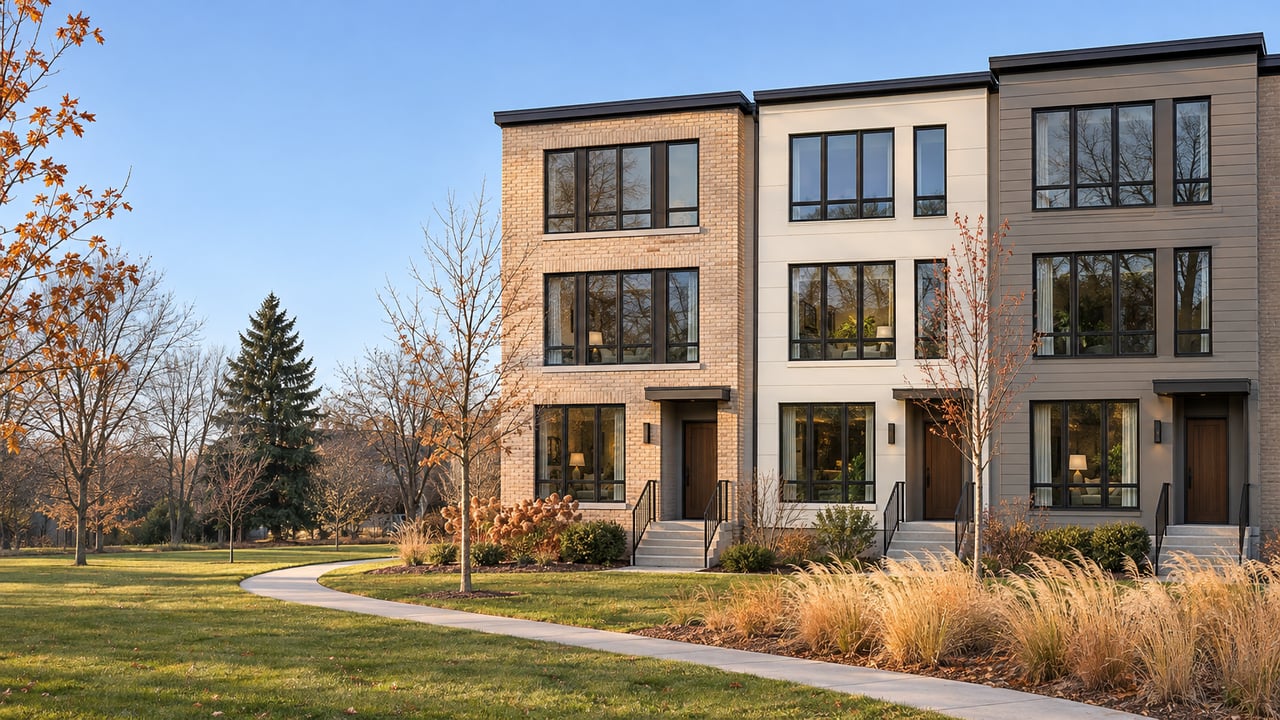
The new rowhomes at Highland Bridge cost about the same per square foot as the older houses around them. In September 2026, Highland Park homes sold for $278 per square foot, according to the Minneapolis Area REALTORS® local market update for Highland Park. Pulte currently lists a finished rowhome at Highland Bridge at $659,990 for 2,412 square feet, which comes to about $274 per square foot.
So a buyer choosing between the old Ford plant site and the blocks around it is mostly not paying extra for a new house. The choice is about the shape of the house and the ground under it. One option is three stories on a small footprint, with an alley garage and parks run partly by an association. The other is a house and yard on streets that have been filling in since streetcars reached the neighborhood. The price gap a buyer sees first, between the rowhome starting prices and the neighborhood median, mostly comes from house size.
Four numbers, one rate
Highland Park's median sale price in September 2026 was $490,000. Over the 12 months through September, the median was $503,250. Next to rowhomes that start in the $600s, the neighborhood can look like the cheaper choice by more than $100,000. The average sale price in September 2026 tells a different story. It was $606,748, almost exactly where the new rowhomes start.
Price per square foot shows why. At September's $278 rate, $490,000 buys about 1,760 square feet. The rowhomes are larger than that. Here is how the builders' current published prices compare per square foot:
- Pulte's Jayton plan starts at $689,990 for 2,322 square feet or more, with three bedrooms and two and a half baths, which is about $297 per square foot.
- Pulte's finished home on Lot 11033 is $659,990 for 2,412 square feet, with two bedrooms, two baths, a second-level deck and front views of the community park, which is about $274 per square foot.
- M/I Homes' Highland Bridge Townhomes are listed "from the low $600s" for its Brockton, Chelsea and Quincy plans, which run 1,898 to 2,194 square feet with three or four bedrooms. At $600,000, that works out to roughly $273 to $316 per square foot, depending on the plan.
Most of these numbers fall within about $40 per square foot of the neighborhood's September rate, and the Pulte finished home sits slightly below it. At Highland Bridge, buying new adds little or nothing to what a square foot costs in Highland Park.
The price was always going to follow the neighborhood
This pricing has some history. In 2020, Pulte Homes and Ryan Companies, the master developer for the Ford site, announced plans for 320 rowhouses. The Highland Villager reported that some prospective buyers had been told prices would start in the $300,000s. Actual starting prices came in between $594,000 and $763,000. Pulte built 166 rowhouses and dropped its plans for a second phase in 2023.
Those launch prices make more sense in light of September's figures. Highland Bridge is a new development, but it sits on Highland Park land, and Highland Park land is priced like Highland Park. A rowhome on a small lot saves on land, and it puts that savings back into floor area stacked three stories high. The builders priced each square foot close to the surrounding resale market, and the totals ended up about where the neighborhood's average sale lands.
With newness priced close to free, a buyer's decision here comes down to how much house they need and whether they want it stacked vertically or spread across a lot.
What the same money buys on each side
At Highland Bridge, the money buys height, newness and a planned public setting. The M/I rowhouses are designed as three-story units with attached garages along the alleys, according to the Villager. They are not being built with solar panels, but they are built so future owners can add a system later. The Highland Bridge development site lists more than 55 acres of parks, recreation fields, open space and waterways, along with more than 10 miles of bike and pedestrian paths. In September, Ryan held a ribbon cutting for The Albert, a 76-unit apartment building at Ford Parkway and Cretin Avenue with 8,500 square feet of ground-floor retail and four separate retail buildings. It also marked the completion of Civic Square Park next door. Its centerpiece is a pair of five-by-five stone friezes saved from the Albert Kahn-designed Ford plant, according to Finance & Commerce.
Some of that public space has a cost attached. A 2021 Ryan Companies community presentation describes the Highland Bridge Master Association, made up of property owners. It maintains three privately owned spaces that are open to the public: the central water feature, the civic square and the civic plaza. The City maintains the four public parks and the public right-of-way. A rowhome buyer pays a share of that upkeep through association dues on top of the purchase price. When you compare homes month to month, the current dues schedule is a figure to get in writing before you write an offer.
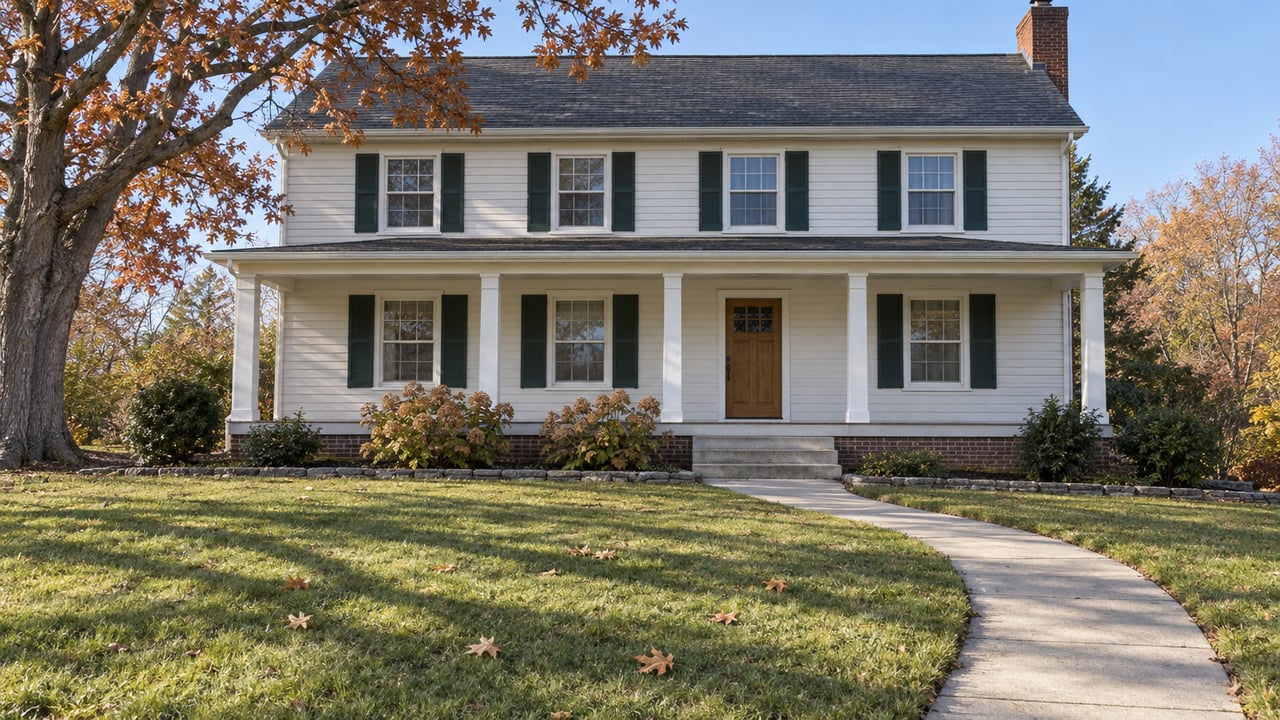
In established Highland Park, the money buys land and age. The City of Saint Paul's historic survey describes a residential district that grew quickly starting in the 1920s, after the streetcar lines were extended and the Ford plant opened in 1926. According to the survey, Edgcumbe Road was the center of an early-20th-century fashionable residential area, and a few homes from that period still stand along Mississippi River Boulevard, including one built in 1906. More houses went up on Edgcumbe between Randolph and Ford Parkway during the Depression. Hidden Falls Park was completed in 1932, and Highland Village opened at Cleveland Avenue and Ford Parkway in 1939. Another wave of building followed World War II. A buyer here gets a yard, a single-family footprint and nearly a century of neighborhood history. They also take on the upkeep of a house built for an earlier era, and our guide to buying an older home in St. Paul covers that in more detail.
How each one is bought
The two options cost about the same per square foot, but the buying process differs. Resale homes in Highland Park are moving quickly. In September 2026 they sold in a median of 26 days for 98.0% of their original list price. There were 56 homes for sale, or 2.4 months of supply, compared with 3.2 months across the Twin Cities metro that month. Buyers of the older houses are competing for a limited supply, and the well-priced ones don't wait long.
New construction works differently. Pulte's home on Lot 11033 is listed as available now, so a buyer can tour it, price it and close on a builder's schedule. There is also more supply coming. In Finance & Commerce's September interview, Ryan's Sean Ryan said M/I Homes had broken ground on new rowhomes south of Pulte's first phase. He called it a second rowhome phase of about 150 more units. The Villager reported that M/I plans 144 rowhouses in four phases. The first 12 are on the block bounded by Saunders, Woodlawn and Montreal avenues, and later land purchases are planned for the summers of 2027 and 2028.
Roughly 150 more rowhomes over the next few years will add supply at roughly the neighborhood's going rate per square foot. For buyers, that means more choice among new homes in a part of St. Paul where resale inventory has been tight. Sellers of larger older homes nearby face a new comparison. Their buyers can now look at a new home of similar size at a similar total price, available without a bidding contest.
The development around those homes is still filling in. When Finance & Commerce talked to Sean Ryan in late September, Weidner Apartment Homes was moving equipment onto the Block 11 site for a 176-unit building with 2,000 square feet of retail. More than 1,000 housing units had been completed out of roughly 3,100 planned at full build-out. A rowhome buyer today should expect construction nearby for several more years.
Frequently Asked Questions
Are Highland Bridge rowhomes more expensive than other Highland Park homes? The total price is higher than the neighborhood median, but the price per square foot is about the same. In September 2026, Highland Park's median sale was $490,000, its average sale was $606,748 and its rate was $278 per square foot. Builders' current published prices for Highland Bridge rowhomes start in the low $600s, and one finished Pulte home is listed at about $274 per square foot.
Who is building at Highland Bridge now? Pulte is listing homes from its rowhome community, and M/I Homes is building its Highland Bridge Townhomes on the phase Pulte dropped in 2023.
What does the Highland Bridge Master Association take care of? According to Ryan's 2021 presentation, it maintains the central water feature, the civic square and the civic plaza, and the City maintains the public parks and streets. Confirm current dues and what they cover directly with the builder or association.
If you are weighing a Highland Bridge rowhome against an older house a few blocks away, Renée Wilson can walk through both with you and compare the price per square foot, the monthly costs and the offer each one will take. If you own a larger Highland Park home and want to know how it compares with the new rowhomes, start with a personal home valuation or schedule a consultation.