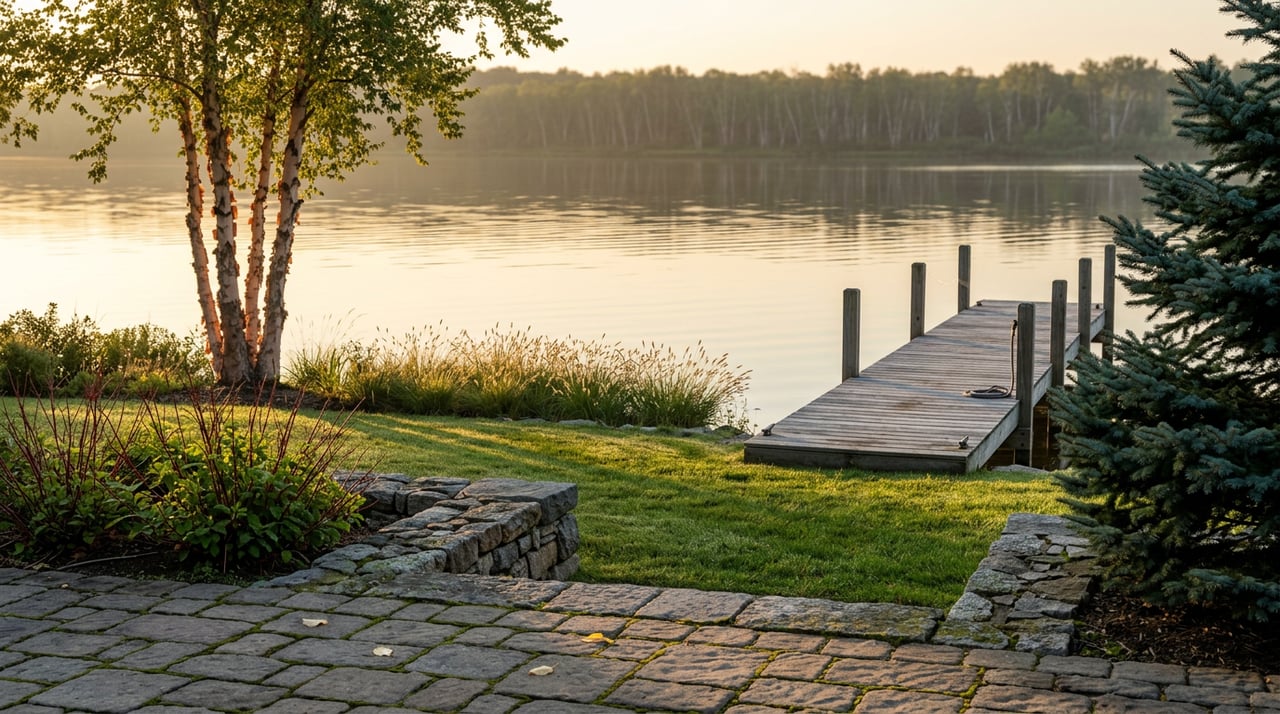
Two listings land in the same search, tagged the same way: Minnetonka, lake living. One sits on Gray's Bay, priced well into seven figures with a shared shoreline and a boat slip application that, under the city's leasing policy, requires city residency. The other sits on Glen Lake, a fifteen-minute drive away, listed in the mid four hundred thousands with a dock, a swim beach, and no connection whatsoever to the big lake the city is named after.
Both are real. Both say lake. Only one of them is actually on Lake Minnetonka.
That gap is not a marketing trick so much as an accident of geography that buyers rarely think to check before they fall for a listing photo. The city of Minnetonka shares its name with one of Minnesota's largest lakes, but the two are not the same thing, and the distance between them matters more than most buyers realize until they are deep into a purchase agreement asking why their dock plans need a permit from an agency they have never heard of.
The One Corner That Touches the Real Lake
Minnetonka's actual frontage on Lake Minnetonka is small and specific. The city sits at the eastern edge of the lake, where its shoreline is limited to Gray's Bay and the connected Libbs Lake, along with the stretch of Minnehaha Creek that begins there. Gray's Bay itself is shared water: the shoreline runs through three municipalities, Wayzata, Minnetonka, and the city of Woodland, so even within this pocket, ownership and jurisdiction shift block by block.
This is also where the lake's plumbing lives. The Grays Bay Dam regulates outflow into Minnehaha Creek, the lake's only outlet, holding the average water level near 929 feet above sea level. Lake Minnetonka itself covers roughly 14,528 acres with about 125 miles of shoreline, according to background compiled on Wikipedia. Minnetonka's share of that shoreline is a sliver, not a coastline.
Who Actually Regulates the Water
The reason this distinction has teeth is regulatory. The Lake Minnetonka Conservation District, a joint powers board with one appointed representative from each of the 14 municipalities that border the lake, controls dock permits, slip counts, boat storage, and speed zones on Lake Minnetonka and its connected bays. Minnetonka is one of those 14 cities. Glen Lake and Shady Oak Lake are not part of that system at all, because they are not part of Lake Minnetonka.
| Gray's Bay & Libbs Lake (true Lake Minnetonka water) | Glen Lake, Shady Oak Lake, and similar | |
|---|---|---|
| Governing body | Lake Minnetonka Conservation District | Local watershed district and city recreation department |
| Boat rules | LMCD-regulated docks, slip limits, wake zones | Municipal or watershed rules, no LMCD involvement |
| Connection to the big lake | Direct, via Minnehaha Creek headwaters | None, physically separate lake |
| Typical use | Boating, marina access, dock permitting | Swimming beaches, fishing, paddling |
Shady Oak Lake, for example, is a spring-fed, 91-acre lake split into three basins, managed under the Nine Mile Creek Watershed District with no LMCD dock permitting whatsoever. The Minnesota DNR lists it as its own fishing lake, located in Hopkins, distinct from anything connected to the main lake.
The Marina Rule Only Locals Know
If you want a permanent boat slip on the actual Lake Minnetonka from within city limits, the city's slip policy comes with a condition most out-of-town buyers never anticipate. Gray's Bay Marina, owned and operated by the city, holds 29 permanent boat slips. Under the city's own leasing policy, those slips go only to Minnetonka residents, one application per residence, with an ongoing waitlist for vacancies. Buy a lake-access home in a different Minnetonka neighborhood, and residency alone does not guarantee you a slip. You go on the same list as everyone else.
The adjoining public launch is also the busiest access point on the entire lake, with three launch lanes and parking for 112 trailers, according to the city's own marina page. Anyone who has tried to back a trailer down that ramp on a July Saturday can tell you what busiest actually feels like.
The Bridge That Quietly Limits Libbs Lake
Libbs Lake is technically Lake Minnetonka water, connected through a dredged channel to Gray's Bay, but a bridge along that channel caps the size of boats that can pass through. The lake itself runs as a closed-throttle, minimum-wake zone year-round, according to Lakeshore Guys. That makes it genuinely part of the big lake's regulatory footprint, but not a place where a larger boat or a busy dock is realistic. A buyer chasing wake-boarding water and a big-lake dock would be disappointed here even though the listing can accurately say Lake Minnetonka.
Same City, Very Different Water
Once you're outside Gray's Bay and Libbs Lake, "lake" in a Minnetonka listing means something else entirely, and the price data reflects it. Homes tagged specifically as on-lake within Minnetonka carried a median list price of $475,000 as of late May 2026, but there were only four such active listings citywide at that moment, a sign of just how narrow this category actually is. Meanwhile, homes in the Glen Lake area, a separate, unconnected lake entirely within Minnetonka, carried a median sale price near $464,000 over the trailing twelve months, essentially in line with the broader on-lake figure despite having nothing to do with the LMCD or the main lake at all.
Set that against the city overall. Over the three months ending May 2026, Minnetonka's median sale price ran about $515,000, with homes selling in roughly 17 days on average. The median sale price was up 4.6 percent from the same period a year earlier. Lake-adjacent pricing in Minnetonka is not obviously a premium tier over the citywide median. That runs against the instinct most buyers bring to a lake search, where water usually means a markup. Here, the real premium, if there is one, comes from LMCD-regulated frontage and slip access specifically, not from the word lake on its own.
What to Verify Before You Write an Offer
Given how much rides on which water body a home actually touches, a short list of checks is worth doing before you get emotionally attached to a listing photo of a dock.
- Confirm the actual lake or bay name in the listing, then check whether it appears on the LMCD's list of regulated waters, not just whether the word Minnetonka shows up anywhere in the address or the marketing copy.
- If boat access matters to you, ask directly whether a dock or slip is deeded to the property, tied to an association, or dependent on a municipal waitlist like the one at Gray's Bay Marina.
- If the home sits on Libbs Lake, ask about the channel and bridge clearance before assuming you can bring in a larger boat.
- If the home sits on Glen Lake, Shady Oak Lake, or another named lake, confirm which watershed district governs it and what that means for water quality management and any shoreline improvement rules.
- Compare the home's price against recent sales on that specific body of water, not the citywide median, since the numbers above show how much they can diverge.
The Word Is Doing More Work Than the Geography
None of this makes a Glen Lake or Shady Oak Lake home a lesser choice. Plenty of buyers want a swim beach and a quiet fishing dock more than they want LMCD paperwork and marina waitlists. The point is simpler: in a city that shares its name with one of the state's largest lakes, that name gets borrowed constantly, and the listing that says lake is not always describing the lake you're picturing. Knowing which water you're actually buying, and which rules come with it, is the difference between a smooth closing and a surprise six months in when you try to register a dock.
Frequently Asked Questions
Does every home near water in Minnetonka have access to Lake Minnetonka? No. Only properties on Gray's Bay or Libbs Lake connect to the actual Lake Minnetonka and fall under LMCD jurisdiction. Homes on Glen Lake, Shady Oak Lake, or other named lakes within the city are on separate, unconnected bodies of water.
Can I get a boat slip at Gray's Bay Marina if I live somewhere else in Minnetonka? The city's 29 permanent slips are leased only to Minnetonka residents, but that residency requirement applies citywide, not just to Gray's Bay neighbors. Availability still depends on the ongoing waitlist, since demand for a limited number of slips runs high.
Is Shady Oak Lake connected to Lake Minnetonka? No. Shady Oak Lake is a separate, spring-fed lake managed by the Nine Mile Creek Watershed District. It has no LMCD dock permitting and no physical connection to Lake Minnetonka.
If you're comparing lake-adjacent neighborhoods in Minnetonka and want a clear read on what a specific listing actually includes, from dock rights to which agency governs the water, Renée Wilson has spent decades sorting exactly these details out for buyers across the Minneapolis metro. Reach out to request a personal home valuation or schedule a consultation before you write an offer on a home that says lake.
This article is general information, not legal, tax or financial advice. Consult a qualified professional about your situation.